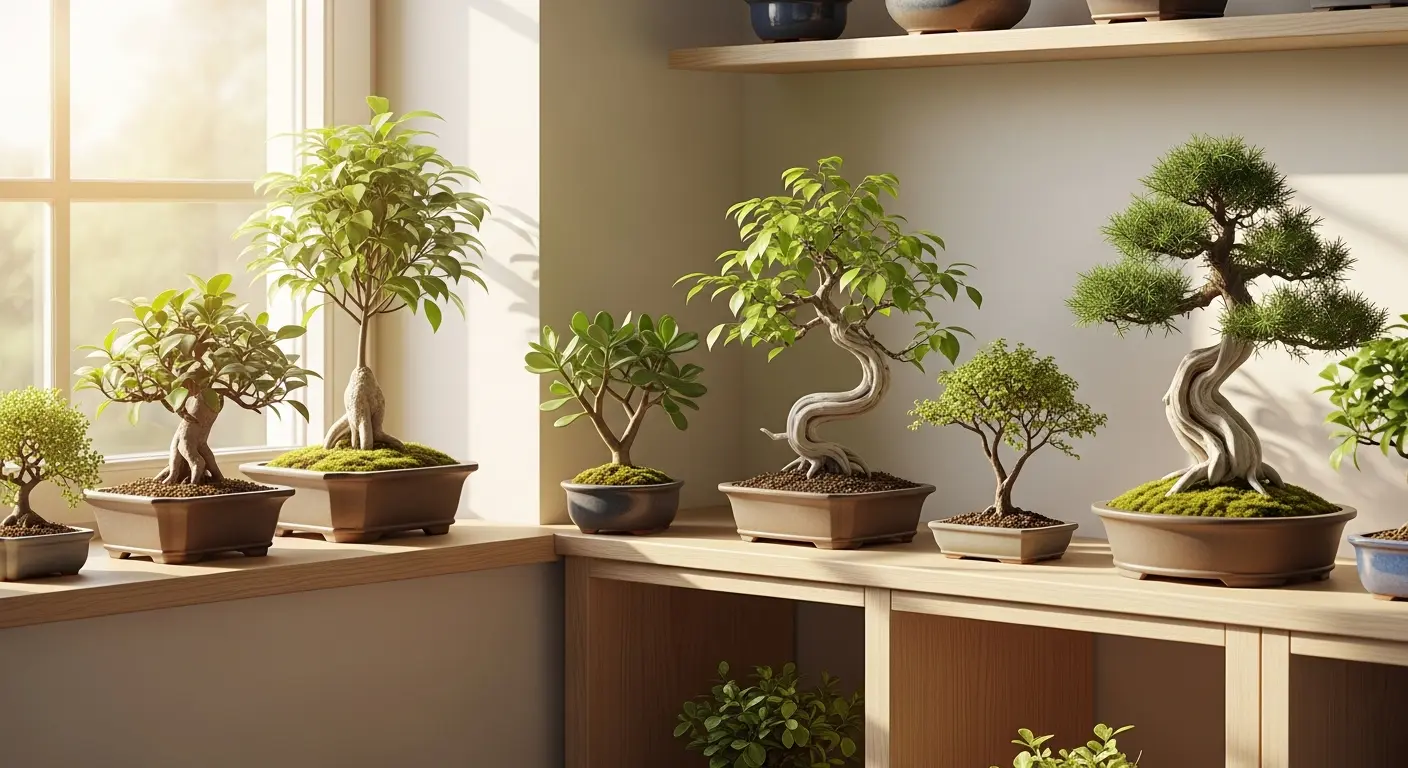
If you’re fascinated by the art of bonsai but don’t know where to start, indoor bonsai trees are the perfect way to begin. These miniature trees not only add natural beauty to your living space but also teach patience, mindfulness, and the joy of nurturing life in a small form.
Choosing the right bonsai tree for beginners is crucial — you need one that’s easy to care for, tolerant of indoor conditions, and forgiving if you make mistakes. Luckily, there are several stunning options that thrive indoors with minimal fuss.
Here’s a detailed guide to the 15 best indoor bonsai trees for beginners, along with care tips, lighting requirements, and what makes each species special.
Table of Contents
1. Ficus Bonsai (Ficus Retusa / Ficus Benjamina)
The Ficus bonsai is often called the gateway tree for beginners — and for good reason. This resilient species can handle low humidity, indoor temperatures, and occasional watering mistakes.
The Ficus Retusa or Ficus Ginseng features thick, gnarled roots and a sturdy trunk that instantly gives a tree-like appearance. It loves bright, indirect sunlight and adapts well to indoor light. Regular pruning helps maintain its elegant canopy, and it can bounce back even if you forget to water it occasionally.
Key Care Tips:
- Light: Bright, indirect light.
- Water: Keep soil slightly moist, but never soggy.
- Best For: Busy beginners who want a hardy, low-maintenance bonsai.
2. Chinese Elm Bonsai (Ulmus parvifolia)
The Chinese Elm bonsai is one of the most adaptable and forgiving bonsai trees for beginners. It can thrive both indoors and outdoors and has a classic “mini tree” appearance with small, serrated leaves and a beautifully textured bark.
This tree grows quickly, allowing you to experiment with pruning and shaping without fear of long-term damage. Its ability to handle trimming makes it a great teacher for bonsai techniques like wiring and branch styling.
Key Care Tips:
- Light: Bright light or partial sun.
- Water: Moderate; keep soil moist but not soaked.
- Best For: Beginners learning shaping and pruning techniques.
3. Jade Bonsai (Crassula ovata)
If you want a bonsai that requires minimal watering, the Jade bonsai, also known as the money tree or lucky plant, is a perfect choice. It’s actually a succulent, meaning it stores water in its fleshy leaves and trunk.
This tree thrives in warm indoor conditions and doesn’t need daily watering. It prefers bright light and a dry environment, making it ideal for homes with low humidity. Its thick, glossy leaves and sculptural form give a striking aesthetic that complements modern interiors beautifully.
Key Care Tips:
- Light: Bright direct light or sunny window.
- Water: Let soil dry completely before watering.
- Best For: Forgetful waterers or those in dry climates.
4. Dwarf Schefflera (Schefflera arboricola)
Also known as the Hawaiian Umbrella Tree, the Dwarf Schefflera bonsai is nearly indestructible. It features glossy, green, umbrella-like leaves and tolerates low light, inconsistent watering, and average indoor humidity levels.
It’s a fantastic bonsai for people who want a tropical look without high maintenance. This species can grow aerial roots that give it an exotic, rainforest-like appearance when trained properly.
Key Care Tips:
- Light: Indirect or filtered light.
- Water: Allow the topsoil to dry between waterings.
- Best For: Indoor tropical bonsai lovers.
5. Fukien Tea Bonsai (Carmona retusa)
The Fukien Tea bonsai is admired for its tiny, dark green leaves, white flowers, and red berries that can appear throughout the year. It’s a little more sensitive than Ficus but still manageable for dedicated beginners.
It prefers warm temperatures and high humidity, so placing it near a window with good light or using a humidity tray helps it thrive. Regular pruning encourages branching and a full, bushy look.
Key Care Tips:
- Light: Bright, warm light.
- Water: Keep soil evenly moist.
- Best For: Beginners who enjoy flowering bonsai.
6. Hawaiian Umbrella Bonsai (Schefflera actinophylla)
Often confused with Dwarf Schefflera, this Hawaiian Umbrella bonsai grows slightly larger leaves but is just as forgiving. It’s a stunning, lush plant that brings a tropical charm indoors.
It tolerates varying humidity and temperature levels, and you can prune it into several artistic styles, from upright to cascade. It’s an excellent indoor bonsai for low-light apartments or offices.
Key Care Tips:
- Light: Moderate to bright indirect light.
- Water: Keep soil lightly moist.
- Best For: Office bonsai or indoor decoration.
7. Serissa Japonica (Snow Rose)
The Serissa bonsai, or Tree of a Thousand Stars, is beloved for its delicate white blooms that appear multiple times a year. Its small leaves and fine branches give it a refined, ornamental look.
While it’s slightly more temperamental about humidity and temperature changes, it rewards consistent care with lush growth and plenty of blossoms. Beginners who are attentive and patient will find this bonsai deeply satisfying.
Key Care Tips:
- Light: Bright but indirect light.
- Water: Regular, light watering; avoid root rot.
- Best For: Beginners wanting a flowering indoor bonsai.
8. Juniper Bonsai (Juniperus chinensis)
The Juniper bonsai is one of the most iconic species in bonsai art, and though it’s traditionally grown outdoors, it can adapt to bright indoor spots. With its fine needles and rugged bark, it perfectly represents the natural bonsai aesthetic.
Junipers enjoy good air circulation and plenty of light. They’re great for beginners who have bright windows or balconies and want to practice wiring and shaping techniques.
Key Care Tips:
- Light: Bright light or direct sunlight.
- Water: Allow the soil to dry slightly between watering.
- Best For: Beginners learning traditional bonsai techniques.
9. Money Tree Bonsai (Pachira aquatica)
The Money Tree bonsai is a popular houseplant often associated with good luck and prosperity. It has a braided trunk and shiny green leaves that look lush and vibrant year-round.
This species thrives in moderate light and doesn’t require constant attention. It’s one of the best bonsai trees for improving indoor air quality while adding an elegant tropical look.
Key Care Tips:
- Light: Bright, filtered sunlight.
- Water: Every 7–10 days or when soil is dry.
- Best For: Homes or offices seeking a symbolic and easy-care bonsai.
10. Sweet Plum Bonsai (Sageretia theezans)
The Sweet Plum bonsai offers a delicate appearance with glossy leaves and reddish bark that peels slightly as it matures. It can produce tiny white flowers and purple fruits in good conditions.
It’s best suited to warm indoor spaces with consistent moisture and light. Its quick growth means you can enjoy frequent pruning and shaping sessions.
Key Care Tips:
- Light: Bright, indirect sunlight.
- Water: Keep soil consistently moist.
- Best For: Bonsai enthusiasts who love colorful foliage.
11. Boxwood Bonsai (Buxus sempervirens)
Boxwood bonsai is another beginner-friendly choice known for its dense foliage and slow, compact growth. Its fine branching structure makes it ideal for shaping into classic bonsai forms.
This hardy species tolerates trimming well and thrives in moderate light. Indoors, it prefers a bright window and regular misting to prevent dryness.
Key Care Tips:
- Light: Bright light to partial shade.
- Water: Keep soil evenly moist.
- Best For: Learning bonsai shaping and leaf pruning.
12. Azalea Bonsai (Rhododendron indicum)
Azalea bonsai are famous for their spectacular flowers that bloom in shades of pink, red, or white. While they need slightly more attention, their beauty makes it worthwhile.
They prefer cool indoor spots with bright light and consistent moisture. Regular pruning after flowering ensures the tree maintains its structure.
Key Care Tips:
- Light: Bright, indirect sunlight.
- Water: Frequent, gentle watering.
- Best For: Beginners who want colorful flowering bonsai.
13. Weeping Fig (Ficus benjamina)
The Weeping Fig is a close cousin of the Ficus Retusa but with slimmer branches and elegant, drooping leaves. It creates a graceful, cascading form that looks beautiful on a windowsill or table.
It adapts well to low humidity and filtered light, though it may drop some leaves when moved — a normal adjustment phase. With steady conditions, it becomes lush and resilient.
Key Care Tips:
- Light: Bright, indirect light.
- Water: When top inch of soil feels dry.
- Best For: Homes with moderate indoor light.
14. Rosemary Bonsai (Rosmarinus officinalis)
The Rosemary bonsai doubles as an aromatic herb and a beautiful miniature tree. Its woody stems and needle-like leaves make it look naturally sculpted, while its fragrance adds freshness to any room.
It prefers bright light and good airflow, so a sunny window is ideal. Be careful not to overwater — rosemary prefers slightly dry conditions.
Key Care Tips:
- Light: Full sun or bright light.
- Water: Let soil dry slightly between waterings.
- Best For: Herb lovers and sunny indoor spaces.
15. Carmona Microphylla (Tea Tree Bonsai)
The Tea Tree bonsai (not the same as tea tree oil plant) is admired for its fine branches, glossy leaves, and small white blossoms. It’s a compact, attractive species that thrives in warm indoor climates.
It enjoys regular pruning and moist soil, making it perfect for those who enjoy nurturing and shaping their plants frequently.
Key Care Tips:
- Light: Bright, warm light.
- Water: Keep soil slightly damp.
- Best For: Beginners who want a flowering indoor bonsai.
Final Thoughts
Starting your bonsai journey doesn’t have to be intimidating. These 15 best indoor bonsai trees for beginners are all hardy, beautiful, and rewarding choices. Whether you prefer flowering varieties like Fukien Tea and Serissa, or easy-care trees like Ficus and Jade, there’s a bonsai that fits your lifestyle.
Remember the golden rules of bonsai care:
- Provide enough light.
- Keep soil moderately moist.
- Prune regularly to maintain shape.
- Repot every 2–3 years for healthy growth.
With patience and observation, you’ll find immense satisfaction in nurturing your miniature tree — and soon, your indoor space will feel like a living work of art.